
De Nieuwe Brandtoren
Contact

The story of de NIEUWE Brandtoren!!
Although the outdoor park and its tower have only existed since 2008, they nevertheless have a special and rich history. This story dates back to 1930, when the nature reserve where the tower stands was first developed. This area, known as the ‘Peelse Heide’, was a rugged landscape at the time, consisting partly of heathland (hence the name). Partly out of a need for timber production, particularly for the mining industry, a woodland area was planted. This woodland consists mainly of pine trees, which, due to their long grain, are extremely suitable for constructing mine shafts. Furthermore, pine wood has the property of creaking before it breaks, which was also highly valuable in the mine. However, pine wood also has a major drawback: ‘It is extremely flammable’.
In 1933, …
The story of de NIEUWE Brandtoren!!
Although the outdoor park and its tower have only existed since 2008, they nevertheless have a special and rich history. This story dates back to 1930, when the nature reserve where the tower stands was first developed. This area, known as the ‘Peelse Heide’, was a rugged landscape at the time, consisting partly of heathland (hence the name). Partly out of a need for timber production, particularly for the mining industry, a woodland area was planted. This woodland consists mainly of pine trees, which, due to their long grain, are extremely suitable for constructing mine shafts. Furthermore, pine wood has the property of creaking before it breaks, which was also highly valuable in the mine. However, pine wood also has a major drawback: ‘It is extremely flammable’.
In 1933, a house and a tower were built on Burgemeester Willekenslaan. This fire tower was used to keep an eye on the woodland for fires and to alert the fire brigade in good time in the event of an emergency. The house, known as the ‘fire watcher’s cottage’, became the home of the municipal foreman who oversaw the afforestation programme.
This first tower, made of wood, didn’t last very long. Ironically, it burnt down. Later, a metal tower was rebuilt, which is still known today as ‘De Oude Brandtoren’ (The Old Fire Tower). Over the years, partly due to the development of better communication technology, the original fire tower lost its function and was demolished. The ‘fire-watcher’s cottage’ remained, and still stands there to this day. It has now been converted into a tavern, where you can enjoy a bite to eat and a drink in true Burgundian style.
Many years later, the woodland also began to serve a recreational purpose. Walking and cycling were popular activities in the nature reserve. That’s why a group of enthusiasts began organising workshops on ‘Nordic walking’, which involves walking with poles. This idea grew into an event known as the ‘Mega Outdoor Day’. Here, visitors could take part in a wide range of outdoor-related activities. Following the huge success of this event, two of those same enthusiasts began planning further outdoor activities in the area. This led to the idea for a new tower, ‘De Nieuwe Brandtoren’. The aim was to ‘restore’ cultural heritage and breathe new life into this well-known concept, this time with a recreational purpose.
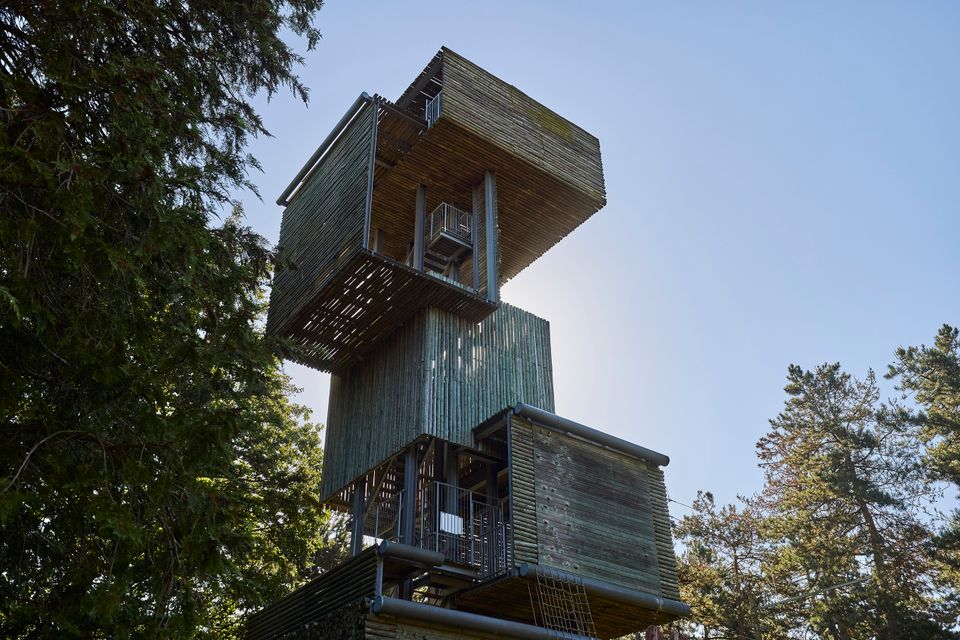
The newly built 26-metre-high tower is not only a recreational attraction but also an icon in its own right. Thanks to its unique appearance, consisting of six blocks stacked on top of one another, it has already attracted the attention of both domestic and international media and was showcased at Dutch Design Week.
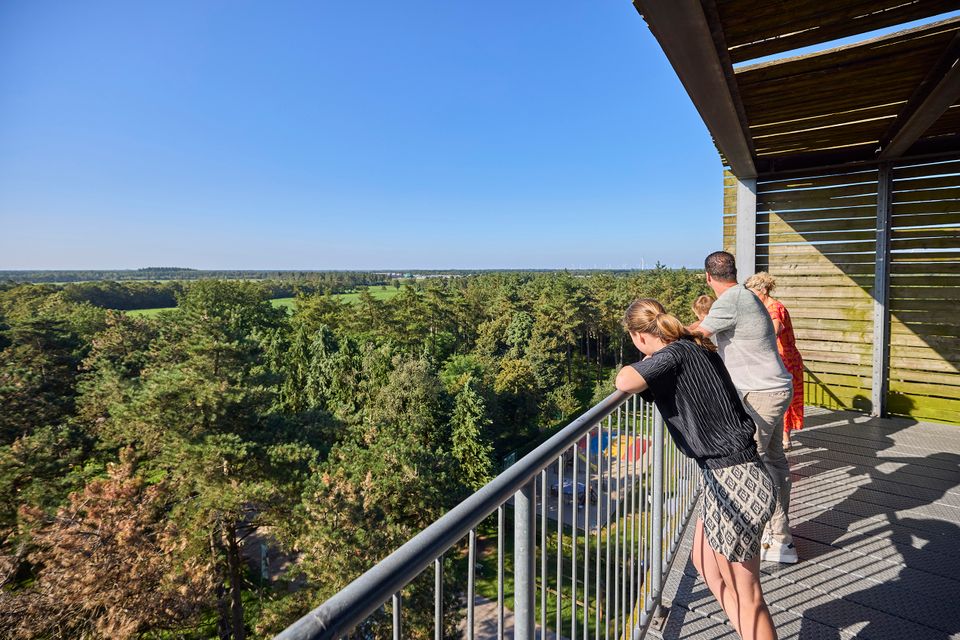
A unique tower, a unique silhouette, a unique purpose and a unique story. It stands proudly above the trees, waiting for visitors to dare to scale its heights to admire the magnificent view.